
Identify Your Gnat: 4 South Florida Types
| Type | Bites? | Where Found | Breeds In | Fix |
|---|---|---|---|---|
| Fungus gnats | No | Near houseplants, entry doors | Moist potting soil (top 2 in.) | Reduce watering; Bti soil drench |
| Fruit flies | No | Kitchen, drains, produce areas | Fermenting fruit, drain slime, spills | Clean drains; eliminate overripe fruit |
| Eye gnats | No (annoy eyes) | Outdoor, face-swarming | Sandy/organic-rich soil | Outdoor barrier spray; DEET |
| No-see-ums (biting midges) | YES: painful | Coastal/Intracoastal, dusk/dawn | Tidal flat sediment | Barrier spray; DEET/Picaridin; screens |
Species-Specific Control
Ready to reclaim your yard? Free assessment, no contracts, plant-oil formula.
Frequently Asked Questions
What are the small gnats that swarm around my face in South Florida?
The most common outdoor face-swarming gnats in South Florida are eye gnats (Liohippelates and Chloropidae species), extremely small flies attracted to eye and nasal secretions. They do not bite but are intensely annoying. Eye gnats are most active in warm, humid conditions and peak during South Florida's rainy season. They breed in soil with high organic matter content and sandy loam soils. Control requires source reduction (reducing decaying organic matter in soil) and/or professional outdoor barrier spray. Fungus gnats (another common South Florida species) prefer moist, organically-rich potting soil and are more of an indoor pest associated with overwatered houseplants and potted plants.
Why do I have so many gnats in my South Florida yard?
Gnat pressure in South Florida yards comes from multiple sources: (1) Overwatered lawn and landscaping: fungus gnats breed in moist soil with high organic content. South Florida's daily summer rain combined with irrigation creates ideal conditions. (2) Decomposing organic matter: compost, leaf litter, mulch beds in the humid South Florida climate support fungus gnat breeding. (3) Fruit and garden waste: fruit flies (Drosophila) breed in fermenting fruit, overripe produce, and food waste. Even a small dropped citrus fruit in your yard can produce thousands of fruit flies. (4) Nearby drainage and moist areas, outdoor gnat populations travel from breeding sources and gather around outdoor living areas in the evening. Professional outdoor barrier spray addresses the adult gnat populations that concentrate in vegetation.
How do I get rid of fungus gnats in my South Florida houseplants?
Fungus gnats are the most common indoor plant pest in South Florida. They breed in the top 2 inches of consistently moist potting mix. Control approaches: (1) Reduce watering frequency, allow the top 2 inches of soil to dry before watering. This is the single most effective step. Fungus gnats cannot complete their life cycle in dry soil. (2) Yellow sticky traps, catch adult gnats emerging from soil, reducing the reproducing population. (3) Bacillus thuringiensis israelensis (Bti) soil drench, organic biological control that kills fungus gnat larvae in soil without harming plants or beneficial insects. (4) Hydrogen peroxide drench (1 part 3% hydrogen peroxide to 4 parts water): kills larvae on contact. (5) Bottom watering: water plants from the saucer rather than the top, keeping the soil surface dry and uninhabitable for gnat larvae.
Do mosquito barrier sprays also kill gnats and fruit flies?
Mosquito Shield's MPB barrier spray, which is applied to vegetation and organic matter zones on your property, has documented reduction effects on multiple small flying insects beyond mosquitoes, including fungus gnats, fruit flies, and outdoor gnats that rest in treated vegetation. The plant-derived active ingredients (including citronella, geraniol, and other botanicals) affect the nervous systems of a broad range of small flying insects. Many customers report notable reduction in outdoor gnats and fruit flies alongside mosquito reduction. However, the most effective gnat control combines barrier spray (for outdoor adult populations) with source reduction (eliminating specific breeding conditions: overwatered soil, decaying fruit, drain buildup for indoor fruit flies).
What's the difference between gnats, fruit flies, and no-see-ums in South Florida?
These three are frequently confused in South Florida: (1) Fungus gnats: small (2 to 3mm), dark, long-legged, weak fliers. Found near potted plants. Don't bite. Breed in moist soil. (2) Fruit flies (Drosophila): small (2 to 3mm), tan/reddish-brown, cluster near fermenting fruit and drain areas. Don't bite. (3) Eye gnats (Liohippelates), extremely small outdoor gnats that swarm around eyes and face. Don't bite but extremely irritating. (4) No-see-ums (Culicoides biting midges): extremely small (1 to 2mm), biting, produce a painful welt similar to mosquito bites but smaller. Most common near tidal/coastal areas and Intracoastal properties. Of these, no-see-ums are the only species that bite, and they are controlled by MPB barrier spray. The non-biting gnats require source reduction strategies alongside outdoor barrier spray.
Outdoor Gnat and Mosquito Control
MPB barrier spray reduces outdoor gnat, mosquito, wasp, and fruit fly populations on your property. FL License JB313837. No contracts, 7-day guarantee.
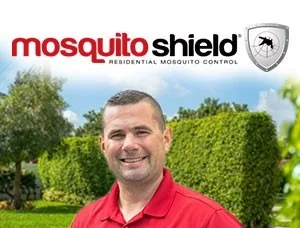
After nearly two decades in corporate finance (most of it at Chico's FAS, where he oversaw operations and finance for 1,000+ retail locations across the US and Canada) Eric Vincent earned his MBA from Rollins College and made a deliberate pivot into pest control, completing his Pest Control Technology degree at the University of Florida while building Mosquito Shield of Boca and Fort Lauderdale from the ground up. He holds five Florida state licenses including Certified Pest Control Operator (JF341961) and Public Health licensee (PH340549), and is currently partnered with Arkion Life Sciences on next-generation all-natural mosquito control research.