
Eric Vincent holds all 5 FL pest control license categories including Lawn & Ornamental, licensed for professional turf pest identification and treatment in Broward and Palm Beach Counties. The same license covers chinch bugs, sod webworms, ornamental pest control, and scale insects.
South Florida Turf Pests
Ready to reclaim your yard? Free assessment, no contracts, plant-oil formula.
Frequently Asked Questions
How do I know if I have chinch bugs vs. another lawn problem?
The chinch bug identification test: (1) Look at the damage pattern: chinch bug damage starts as irregular yellow patches in the hottest, sunniest parts of your lawn (near pavement, in exposed areas) and expands outward. If your damage is in shaded, moist areas, it's less likely to be chinch bugs. (2) The coffee can test: Cut the bottom off a large coffee can or other metal cylinder. Push it 2 inches into soil at the edge of the dead/living turf boundary. Fill with water and watch for 3 to 5 minutes. Chinch bugs float. If you have them, you'll see tiny insects floating up within minutes of flooding the area. (3) Inspect the thatch: Crouch down and push the grass aside at the damage edge. Chinch bugs live in the thatch layer and are visible to the naked eye, tiny black insects (3 to 4mm) with distinctive white wings folded in an X pattern on their back. Nymphs are red with a white stripe. If you see these at the turf margin, you have chinch bugs. (4) Compare to drought stress: Drought-stressed turf also turns yellow-brown, but drought damage follows irrigation patterns (areas farthest from sprinkler heads) while chinch bug damage follows heat/stress maps (sunny, hot spots first). Watering chinch bug-damaged turf doesn't help it recover: the grass is being killed by the pest toxin, not drought.
What lawn treatment service does Mosquito Shield offer for turf pests?
Mosquito Shield holds FL License JB313837 including the Lawn & Ornamental category. We are licensed and equipped for turf pest identification and treatment in Broward and Palm Beach Counties. Our Lawn & Ornamental service targets chinch bugs, sod webworms, mole crickets, armyworms, and ornamental pests (scale insects, whiteflies, aphids, mites) with professionally formulated products applied at the correct rate and timing for South Florida turf conditions. Service includes: (1) Property walk with turf damage assessment and pest identification, determining what's actually damaging your lawn before any product is applied. (2) Targeted treatment application appropriate to the identified pest(s) and your turf type. (3) Irrigation guidance: many turf pest treatments require specific pre- and post-application watering to activate the product into the root zone where pests live. (4) Follow-up monitoring: professional turf programs include follow-up to assess control and retreat if necessary, since some pests (chinch bugs, sod webworms) have multiple annual generations in South Florida. Call 561-443-3333 or request a free assessment to have your turf damage evaluated.
Why does my St. Augustine lawn keep getting damaged even after I spray it myself?
There are four main reasons DIY chinch bug and sod webworm treatments fail on South Florida St. Augustine lawns: (1) Pyrethroid resistance - South Florida's chinch bug population has widespread resistance to many over-the-counter insecticides. Studies at the University of Florida document that the same active ingredients in common lawn sprays have dramatically reduced effectiveness on resistant South Florida populations compared to the same products in other regions. This means you can apply the correct product at the label rate and see minimal results. (2) Thatch penetration, chinch bugs and sod webworm larvae live deep in the thatch layer where broadcast sprays often don't reach at effective concentrations. Professional products and application methods (including soil drenches) are designed to penetrate thatch and deliver active ingredient to pest habitats. (3) Timing errors: most lawn pest treatments need to target the nymph (juvenile) stage when the pests are most vulnerable. Calendar spraying misses peak vulnerability windows. (4) Incomplete coverage, applying product to visible damage rather than the live/dead turf boundary misses the active chinch bug feeding front, which has already moved outward from the dead zone.
Is South Florida's lawn pest season really year-round?
Yes: unlike northern states where cold winters kill or suppress lawn pest populations, South Florida's climate allows chinch bugs, sod webworms, and many other turf pests to remain active and reproduce throughout the year. South Florida's year-round lawn pest dynamics: CHINCH BUGS: Continuous generation development year-round, with populations peaking during summer heat stress. Cold snaps below 50°F slow development briefly but don't kill populations. SOOD WEBWORM (Tropical): 28 to 35 day generation time means multiple generations per year. No true dormancy in South Florida; activity slows slightly in cooler months (December to February) but larvae remain active in the turf. MOLE CRICKETS: Most active damage during spring mating flight (March to April) and nymph feeding season (June to September). Less visible in winter but still present. ARMY WORMS: Not year-round: outbreak windows are August through November during wet season/post-tropical weather. Not present in low numbers between outbreaks. The practical implication: South Florida homeowners need year-round turf monitoring, not just seasonal treatment. A healthy lawn inspection schedule, even biannual professional assessment, catches early infestations before they cause irreversible turf damage.
Can sod webworm and chinch bug damage be reversed?
The answer is different for each pest: CHINCH BUG DAMAGE: Cannot be reversed in the damaged area. Chinch bugs inject a toxin that kills individual grass plants: the turf in the dead patch is dead, not dormant. Once chinch bug populations are eliminated through professional treatment, the damaged area will need to fill in from the edges (for St. Augustine, which spreads by stolons) or through sod replacement. The goal of professional treatment is to stop the expanding front, protecting the undamaged turf surrounding the dead zone, rather than reviving dead grass. Smaller chinch bug patches (2 to 4 square feet) typically fill in via stolon spread within 6 to 8 weeks post-treatment in warm weather with adequate irrigation. Larger patches may require sod replacement. SOD WEBWORM DAMAGE: The root system is typically intact: webworms eat grass blades but don't damage roots. Once the larval infestation is eliminated with treatment, the root system can push new growth relatively quickly, especially in the wet season with adequate rainfall. Damaged St. Augustine turf often shows significant recovery within 2 to 3 weeks of effective control during active growing season. Fertilization and adequate irrigation following treatment accelerates recovery.
Lawn & Ornamental Treatment, Broward & Palm Beach Counties
Professional turf pest identification and treatment for St. Augustine, Bermuda, Zoysia, and Bahia lawns. FL License JB313837. Schedule a free property assessment and find out what's actually damaging your lawn.
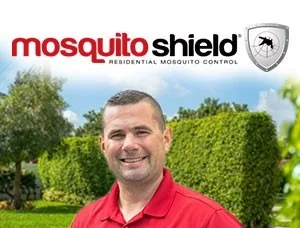
After nearly two decades in corporate finance (most of it at Chico's FAS, where he oversaw operations and finance for 1,000+ retail locations across the US and Canada) Eric Vincent earned his MBA from Rollins College and made a deliberate pivot into pest control, completing his Pest Control Technology degree at the University of Florida while building Mosquito Shield of Boca and Fort Lauderdale from the ground up. He holds five Florida state licenses including Certified Pest Control Operator (JF341961) and Public Health licensee (PH340549), and is currently partnered with Arkion Life Sciences on next-generation all-natural mosquito control research.