
Silverfish thrive year-round in South Florida's high humidity: they concentrate in bathrooms, garages, and storage areas. Professional perimeter treatment plus reducing humidity below 60% RH in problem areas is the most effective approach. Moisture control without treatment leaves the population; treatment without moisture control allows rapid population recovery.
South Florida Silverfish Fast Facts
75%+ RH for optimal breeding; survives at lower humidity but won't reproduce
70 to 90°F: South Florida year-round conditions are ideal
Paper, book bindings, clothing starch, wallpaper paste, dry pantry goods, natural fabric
3 to 6 years: one of the longest-lived insects in homes
Nocturnal: rarely seen during the day; most active overnight
Foundation gaps, plumbing penetrations, wall voids, drains, door gaps
Ready to reclaim your yard? Free assessment, no contracts, plant-oil formula.
Frequently Asked Questions
Why are silverfish so bad in South Florida homes?
Silverfish are humidity-dependent insects that thrive when relative humidity is above 75%, and South Florida's climate provides this condition year-round. In northern states, winter heating dries out homes and causes silverfish populations to decline seasonally. In South Florida: (1) Year-round high humidity, both outdoor and indoor humidity remain favorable for silverfish throughout all 12 months. (2) Air conditioning creates microenvironments, while AC reduces interior humidity, the mechanical spaces around AC systems (plenum, wall penetrations, attic around ductwork) and areas without AC coverage (garages, storage rooms, bathroom cabinets) maintain high humidity year-round. (3) No winter die-off: silverfish have no seasonal mortality event in South Florida's climate. Populations compound indefinitely if not treated. (4) Abundance of food sources: silverfish feed on starches (paper, cardboard, bookbinding glue, wallpaper paste, clothing starch) and are never food-limited in occupied homes.
Where do silverfish hide in South Florida homes?
Silverfish concentrate in the highest-humidity locations in your home: (1) Bathrooms: behind vanity cabinets, under sinks, around toilet bases. The combination of moisture from plumbing and limited ventilation creates ideal silverfish habitat. (2) Garages: South Florida garages are typically non-air-conditioned, creating permanent high-humidity conditions ideal for silverfish. Cardboard boxes stored in garages are both habitat and food source. (3) Attics, attics with poor ventilation accumulate moisture and heat, creating silverfish conditions. Attic insulation is a silverfish food source (starch binders in some materials). (4) Laundry rooms, moisture from washer operation and poor ventilation. (5) Under appliances: the warm, humid space under refrigerators, dishwashers, and washing machines. (6) Inside walls and floor gaps, silverfish navigate via wall voids and floor cracks, particularly in older construction with more penetration points. (7) In stored paper goods: stacks of newspapers, cardboard boxes, books, and files are both food and harborage.
What damage do silverfish do in South Florida?
Silverfish cause damage through their feeding on starchy organic materials: (1) Paper and books: silverfish feed on the cellulose in paper and the starch in book bindings and glossy magazine coatings. Paper documents stored in garages or closets can be significantly damaged over time. Valuable books and documents should be stored in sealed plastic containers rather than cardboard boxes in humid spaces. (2) Clothing and fabric: silverfish feed on clothing starch (cotton, linen, rayon) and sometimes on the fabric itself, leaving irregular holes and surface damage. Stored clothing in humid closets and attics is particularly vulnerable. (3) Wallpaper: the paste used in wallpaper installation is a prime silverfish food source. Wallpaper peeling, bubbling, or developing surface damage in high-humidity areas may involve silverfish feeding on the paste from behind. (4) Pantry goods: silverfish will feed on dry stored goods including flour, sugar, cereals, and crackers if packaging is accessible. Sealed containers prevent this exposure. (5) General structural damage: unlike termites, silverfish don't cause structural damage, but long-term infestations in attics can damage insulation and other materials over time.
How do I get rid of silverfish in South Florida?
Effective silverfish control requires addressing both the silverfish population and the humidity conditions that sustain them: (1) Professional perimeter treatment: a professional residual insecticide application targeting wall voids, baseboards, under appliances, and in harborage areas kills active silverfish and establishes a residual that intercepts new ones. This is the fastest way to reduce an active infestation. Perimeter spray applied to exterior foundation and penetration points prevents exterior-to-interior movement. (2) Moisture reduction, the single most important long-term control measure. Fix any plumbing leaks, improve bathroom ventilation, use a dehumidifier in garage and storage areas (target below 60% RH), improve attic ventilation if inadequate. Without reducing humidity, treated populations will recover. (3) Eliminate food sources and harborage: store paper documents, books, and clothing in sealed plastic containers rather than cardboard boxes. Keep garage organized with minimal floor contact of stored materials. (4) Seal entry points: caulk gaps around plumbing penetrations, baseboards, and floor/wall junctions. This limits silverfish movement between treated and untreated areas. (5) Ongoing perimeter maintenance, silverfish in South Florida require year-round attention. A perimeter pest service applied every 60 to 75 days prevents population rebuilding after initial treatment.
Does mosquito barrier spray kill silverfish too?
Mosquito barrier spray targets vegetation and outdoor surfaces. It does not address the indoor humidity environments where silverfish primarily live. For silverfish control: the appropriate treatment is perimeter spray applied to interior baseboards, wall voids, under appliances, in bathroom cabinets, and around any points where silverfish are concentrated, combined with the exterior foundation perimeter that prevents outdoor-to-indoor movement. Our Pest Shield perimeter pest service covers silverfish as part of the interior-exterior treatment, different from our mosquito barrier spray (which targets outdoor vegetation for mosquito resting and breeding-adjacent control). If you're seeing silverfish inside your home and mosquitoes outside, you may benefit from both services. They address different pest environments with different products. Contact us to assess which services your specific situation requires.
Pest Shield - Silverfish, Ants, Roaches & More
Perimeter pest treatment every 60 to 75 days covers silverfish, ants, roaches, palmetto bugs, spiders, and other perimeter pests, inside and out. FL License JB313837. No contracts.
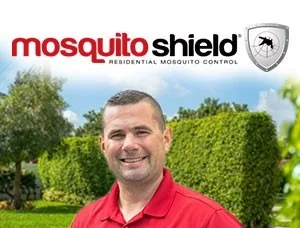
After nearly two decades in corporate finance (most of it at Chico's FAS, where he oversaw operations and finance for 1,000+ retail locations across the US and Canada) Eric Vincent earned his MBA from Rollins College and made a deliberate pivot into pest control, completing his Pest Control Technology degree at the University of Florida while building Mosquito Shield of Boca and Fort Lauderdale from the ground up. He holds five Florida state licenses including Certified Pest Control Operator (JF341961) and Public Health licensee (PH340549), and is currently partnered with Arkion Life Sciences on next-generation all-natural mosquito control research.