
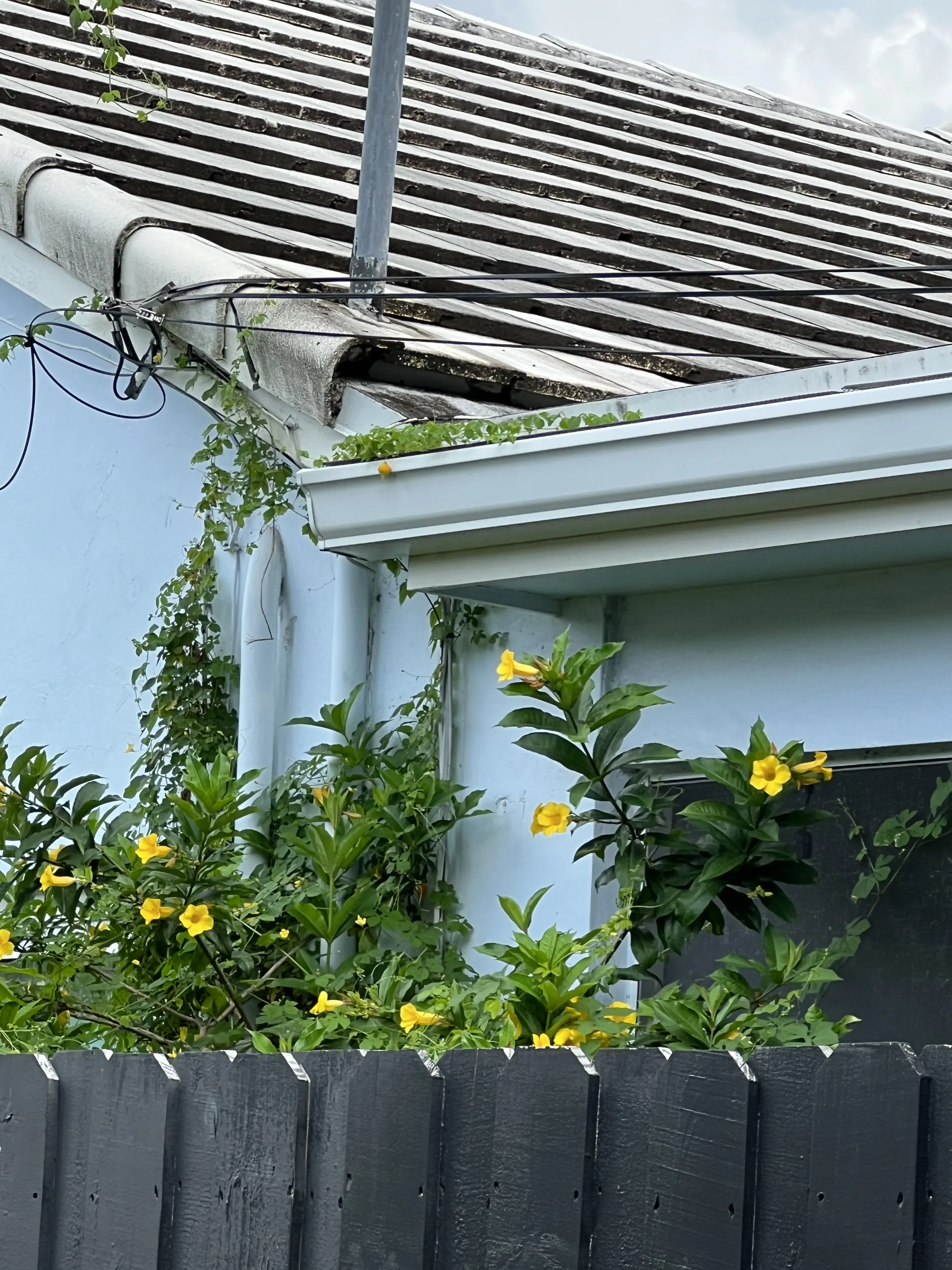
Drive through any neighborhood in Boca Raton or Fort Lauderdale and you will see the evidence: once-dense ficus hedges now reduced to bare branches, fronds coated in white waxy residue, sooty black mold turning leaves into something resembling a laboratory petri dish. Whiteflies did this: specifically, two invasive species that have no significant natural enemies in South Florida's urban landscape.
Understanding which species you are dealing with, what damage they cause, and what treatments actually work is the first step toward protecting your landscaping investment.
The Two Main Whitefly Pests in Broward and Palm Beach County
Ficus Whitefly
Rugose Spiraling Whitefly
Why South Florida's Ficus Hedges Are So Vulnerable
For decades, ficus (primarily Ficus benjamina and the hedge variety Ficus microcarpa) was the default privacy hedge in South Florida. Drive through Boca Raton, Fort Lauderdale, Coral Springs, or any established neighborhood and you will find ficus hedges on property after property, often maintained at 6 to 12 feet tall, serving as the primary privacy and windscreen barrier for outdoor living spaces.
This monoculture is the vulnerability. When a pest that specializes in ficus arrives and spreads, as the ficus whitefly did starting in 2007, it finds a nearly unlimited food source in every residential neighborhood in the county. The insect moves from property to property via wind, landscaping equipment, and infested nursery material, with no significant biological controls to slow its spread.
The result: entire street after street of dead or severely damaged ficus hedges, representing thousands of dollars in lost landscaping per property. The ficus whitefly infestation in South Florida has been described by the University of Florida Extension as one of the most economically significant ornamental pest introductions in Florida history.
How to Identify Whitefly Damage on Your Property
- •Yellowing leaves, particularly on upper and inner portions of hedge
- •Small white insects visible when leaves are disturbed
- •Tiny scale-like eggs on leaf undersides
- •Significant defoliation - branches visible through hedge
- •Sooty black mold on leaf surfaces and hardscape below
- •Dense populations on leaf undersides visible without magnification
- •Branch dieback: bare dead branches extending through the hedge
- •Partial or full defoliation of sections
- •Weakened plant vulnerable to secondary pests and disease
What Actually Works Against South Florida Whiteflies
Whitefly control in South Florida requires understanding the insect's biology. Adult whiteflies are relatively easy to kill with contact insecticides, they are small and exposed. But the immature stages (nymphs) that feed on leaf undersides are protected by waxy coatings and scale-like coverings. Eggs are even more protected. This is why a single spray that kills the adults you see does not solve the problem, the next generation hatches from eggs that survive.
Applied to soil around the base of hedges, taken up by roots and distributed throughout plant tissue. Insects feeding on the plant absorb the systemic insecticide. Effective for 3 to 12 months depending on product and conditions.
Note: Should not be applied near water features, edible plants, or areas with active bee foraging. Professional application ensures correct dosing.
Horticultural oils (neem, petroleum) and insecticidal soaps suffocate whiteflies and nymphs on contact. Must achieve complete coverage of leaf undersides, which is difficult without commercial spray equipment on large hedges. Require repeat applications every 7 to 14 days.
Note: Avoid during high heat and full sun, can burn leaves. Not residual, only kills insects present at time of spray.
A newer chemistry that is taken up by leaves and moves through the plant, affecting feeding insects including protected nymphs. More effective against the scale stage than contact-only sprays. Professional use product.
Note: More expensive; professional application required.
Parasitic wasps (Encarsia species) are natural predators of whitefly nymphs and are commercially available. Most effective at landscape or neighborhood scale rather than individual property level. Can be incorporated into an IPM program.
Note: Incompatible with broad-spectrum insecticide programs: you cannot use both simultaneously.
What to Replace Dead Ficus Hedges With
For homeowners who have lost ficus hedges and are replanting, the lesson is diversification. Planting another ficus hedge in the same location simply repeats the cycle unless you commit to ongoing whitefly management. University of Florida Extension recommends these alternatives as whitefly-resistant or less-susceptible choices for South Florida privacy hedges:
Of these, clusia (Clusia rosea and Clusia guttifera) has become the most popular replacement. It grows densely, tolerates wind and salt, has no significant whitefly susceptibility, and achieves the same visual privacy as ficus once established.
Ready to reclaim your yard? Free assessment, no contracts, plant-oil formula.
Frequently Asked Questions
What are whiteflies and why are they so bad in South Florida?
Whiteflies are tiny (1 to 2 mm) sap-sucking insects that feed on the underside of plant leaves. South Florida has several damaging species, most notably the ficus whitefly (Singhiella simplex) and the rugose spiraling whitefly (Aleurodicus rugioperculatus). They are 'so bad' in South Florida for a combination of reasons: the subtropical climate allows year-round reproduction with no winter die-off, natural predators are less effective in the urban landscape than in natural ecosystems, South Florida homeowners densely plant the same species (especially ficus), and the insects spread rapidly from property to property via wind and plant material movement.
What is the ficus whitefly and does it kill ficus hedges?
The ficus whitefly (Singhiella simplex) is an Asian species first detected in Miami-Dade County around 2007 and now established throughout Broward and Palm Beach counties. It feeds exclusively on ficus species: particularly Ficus benjamina (weeping fig) and Ficus microcarpa (hedge ficus), which are by far the most common hedge plants in Boca Raton, Fort Lauderdale, and all of South Florida. Yes, it can kill ficus hedges. An untreated infestation will first cause yellowing and leaf drop, then defoliation, and finally branch dieback. Large established hedges can die within one to two growing seasons of a severe infestation.
What is the rugose spiraling whitefly and is it different from ficus whitefly?
The rugose spiraling whitefly (Aleurodicus rugioperculatus) is different and in some ways more alarming. It attacks a much wider range of plants, over 100 host species, including coconut palms, bird of paradise, gumbo limbo, black olive, and many others. It is identifiable by the distinctive waxy white spiraling egg masses it deposits on the underside of leaves, often visible to the naked eye. This species was first detected in Broward County in 2009 and has spread throughout South Florida. It produces large amounts of waxy secretions and sooty mold that coat leaves, reducing photosynthesis. It rarely kills plants outright but causes significant aesthetic damage and decline.
How do I know if I have whiteflies on my plants?
Signs of whitefly infestation: First, check the underside of leaves. You will see small white winged insects (whiteflies) that fly up when disturbed. The undersides will also have tiny circular scale-like eggs and waxy residue. Second, look for yellowing leaves that fall prematurely. Third, check for sooty mold: a black powdery coating on leaves caused by a fungus that grows on the honeydew whiteflies excrete. Fourth, for rugose spiraling whitefly specifically, look for the distinctive white waxy spiral patterns on leaf undersides. They are quite visible and look almost like cotton candy filaments in a spiral shape.
What treatments actually work against whiteflies?
Effective whitefly treatments in South Florida include: systemic insecticides applied as soil drenches (imidacloprid-based products are most common: the chemical is absorbed by the plant and kills insects feeding on it); foliar sprays of insecticidal soaps, horticultural oils, or pyrethroid-based products (less effective long-term because they only kill on contact and must reach the insects on leaf undersides); and biological control using natural predators like Encarsia species parasitic wasps (commercially available but most effective at landscape or community scale, not individual property level). Consistent treatment is required because eggs on leaves are protected from most contact sprays.
Can I treat whiteflies myself or do I need a professional?
Homeowners can purchase whitefly control products including systemic soil drenches at garden centers, but professional treatment is significantly more effective for several reasons. Professionals have access to commercial-grade formulations and proper calibrated application equipment. Systemic soil drenches require correct dosing based on plant trunk diameter and soil type. Foliar treatments require complete coverage of leaf undersides, which on large hedges requires commercial spray equipment. Misapplication of systemic products near waterways or in certain soil conditions can cause environmental issues. For established hedges that represent significant investments, professional treatment is strongly recommended.
Are whiteflies related to mosquito control services?
Whiteflies are not controlled by mosquito barrier spray treatments. They are plant pests that require specific treatments targeting the insects on and within the plant. However, they fall under Lawn and Ornamental pest control, which is one of the five Florida pest control license categories that we hold (FL License JB313837). Our Perimeter Pest Control service can include ornamental pest treatments for properties with whitefly issues. Ask about this when you contact us.
Why are my neighbor's hedges dying but mine aren't?
Whitefly infestation severity varies by species planted, sun exposure, plant health, and proximity to initial infestation sources. Hedges that receive more sun tend to be less severely impacted than those in shade. Plants under water or nutrient stress are more susceptible. If your neighbors have ficus hedges and you do not, your plantings may simply be non-host plants for the ficus whitefly. However, once a whitefly infestation is established on adjacent properties, spread to your landscape is virtually inevitable without active management.
Lawn, Ornamental, and Mosquito Control: All Under One License
Mosquito Shield of Boca and Fort Lauderdale holds all 5 Florida pest control license categories, including Lawn and Ornamental (License JB313837). Ask about ornamental pest services when you call.
After nearly two decades in corporate finance (most of it at Chico's FAS, where he oversaw operations and finance for 1,000+ retail locations across the US and Canada) Eric Vincent earned his MBA from Rollins College and made a deliberate pivot into pest control, completing his Pest Control Technology degree at the University of Florida while building Mosquito Shield of Boca and Fort Lauderdale from the ground up. He holds five Florida state licenses including Certified Pest Control Operator (JF341961) and Public Health licensee (PH340549), and is currently partnered with Arkion Life Sciences on next-generation all-natural mosquito control research.